YAZƏM

YAZƏM
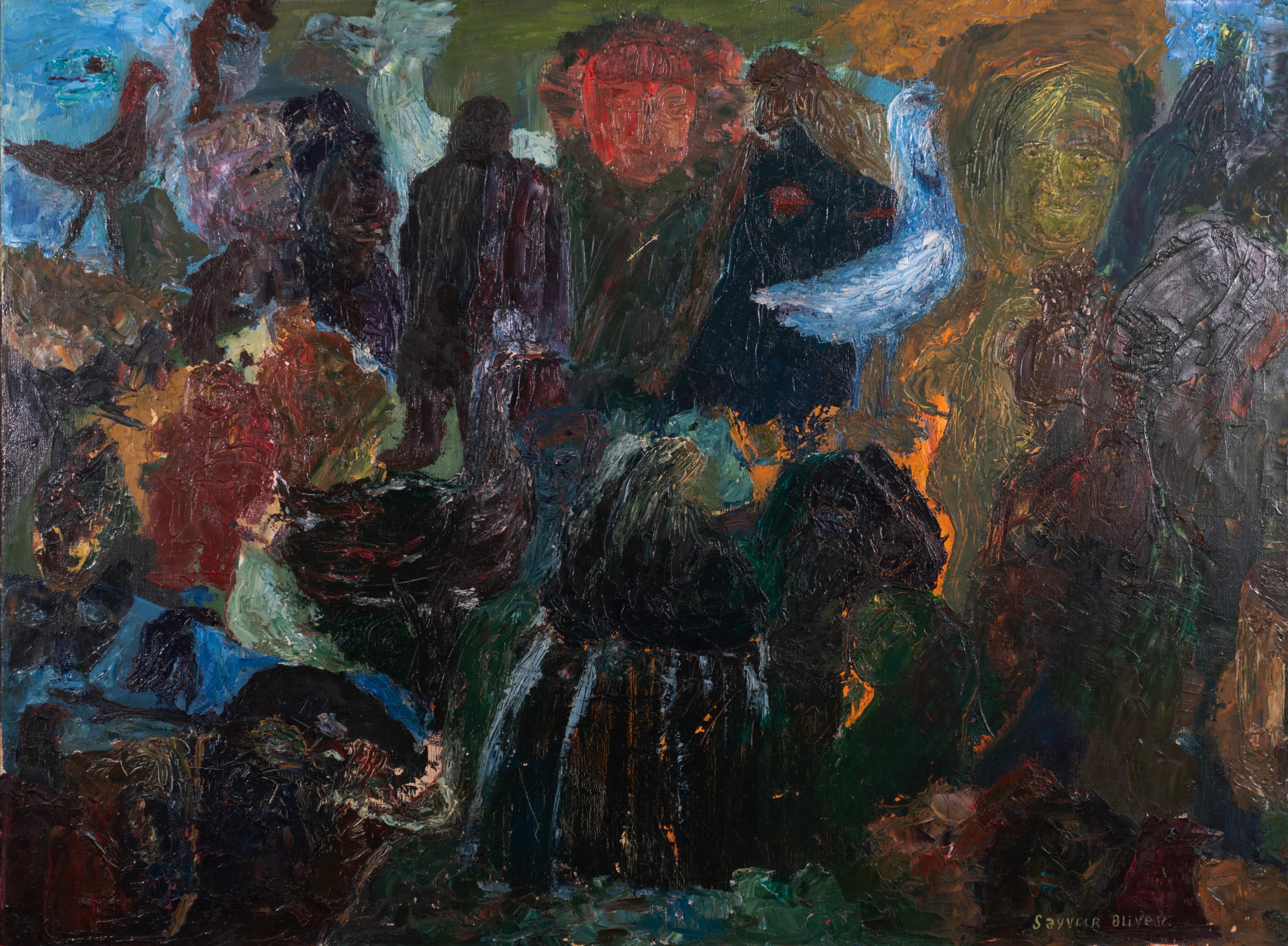
When silence speaks more honestly than any words
YAZƏMisagesture,alanguage,aninneracknowledgmentwherevulnerabilitybecomesaculturalstance.
Itisamirror.Itdoesnotjudge.Itreveals.
Invulnerabilityliesourgreateststrength.
IV
From silence to light — the viewer's path through four emotional states
Тишина
Frozen bodies, detachment, muted colors. An internal pause before the confession.
Напряжение
Distorted bodies, aggressive gesture, inner explosion. A scream that cannot be uttered.
Обряд
Masks, ancient symbols, archetypes, shamanic codes. A return to origins through visual language.
Свет
Hope, warmth, acceptance. Flowers, birds, soft forms. A path to self through forgiveness.
From silence — to light. From wound — to strength.
YAZƏM is a mirror. It does not judge. It reveals. And therein lies its power.

Shusha
He writes the fractures between forms. His images are not beings — they are states. Aliyev works where the boundary between the real and the symbolic turns into pain. His painting is not a narrative — it is a trace. A trace of the attempt to be free while remaining human. His figures are like shards of an inner “self” gathered in a body that can no longer bear the weight. Birds, masks, hybrid creatures — not fantasies, but the visual language of the repressed. He doesn’t depict the world — he shows how this world cuts from within. Color in his works does not convey mood — it disturbs, provokes, exposes. Line is an attempt to hold onto a form that still disintegrates under the weight of feeling. Sayyar doesn’t seek answers. He captures the crack between the personal and the social. Between body and role. Between who you want to be — and who you’re allowed to be. And it is precisely in this crack that YAZƏM is born.
View profileShusha
He writes the fractures between forms. His images are not beings — they are states. Aliyev works where the boundary between the real and the symbolic turns into pain. His painting is not a narrative — it is a trace. A trace of the attempt to be free while remaining human. His figures are like shards of an inner “self” gathered in a body that can no longer bear the weight. Birds, masks, hybrid creatures — not fantasies, but the visual language of the repressed. He doesn’t depict the world — he shows how this world cuts from within. Color in his works does not convey mood — it disturbs, provokes, exposes. Line is an attempt to hold onto a form that still disintegrates under the weight of feeling. Sayyar doesn’t seek answers. He captures the crack between the personal and the social. Between body and role. Between who you want to be — and who you’re allowed to be. And it is precisely in this crack that YAZƏM is born.
View profile


